

Ancient Stone Bothering
A day out at Stonehenge and Avebury

On a warm, spring day at the end of March, I took my Dad - a.k.a Da, as we affectionally call him and how I’ll call him from here on out - ancient stone bothering at English Heritage’s Stonehenge and Avebury (which is managed on behalf of EH by the National Trust) sites. I had never been to Stonehenge before, so while I was back home for Mother’s Day, I thought I’d take advantage of being back in Wiltshire for the weekend.
As a fan of late 1960s and 1970s rock and psychedelia, these stones have a mythical status, especially with the Stonehenge Free Festival being held there from 1974 to 1984. The festival would culminating with the summer solstice (Lammas/Litha) on or near 21 June, and saw bands that I love like Ozric Tentacles and Hawkwind play there. Whereas Avebury’s claim to fame is that it was the setting for the 1977 folk horror TV series Children of the Stones. The series follows the adventures of astrophysicist Adam Brake and his teenage son Matthew after they arrive in the small village of Milbury, which is built in the midst of a megalithic stone circle.
As an animist, I do believe that these circles held a religious significance for the people who constructed them. I can see why there is still a thriving pagan, neopagan, heathen, wiccan and druidic communities of worshipers around them, I mean they are pretty awesome places to catch the sun rise on the solstices right? The folklore around the stones is rich and spooky, especially as both sites have a claim to the Devil himself being associated with certain stones. However, what fascinates me is how their interpretation has spread across multiple areas; astrological, religious, archaeological, mystical, cultural, historical, scientific and even induced theories that there were ancient aliens. No matter how they got there, each of these circles are amazingly precise structures which frequently changes our perceptions on how we see our ancestors of the Neolithic era.
Myself and Da had an excellent day exploring these ancient monuments, walking across the fields and soaking up the spring sunshine.

Stonehenge
Located two miles (3 km) west of Amesbury, on Salisbury Plain lies arguably one of the most recognisable national monuments in the UK - Stonehenge. The prehistoric megalithic structure was constructed in several stages beginning about 3100 BC and continuing until about 1600 BC, with the famous sarsen stone circle placed in the period between 2600 BC and 2400 BC. The world famous Welsh bluestones in their current positions date between 2400 and 2200 BC.
The monument “is aligned towards the sunrise on the summer solstice and sunset on the winter solstice. The stones are set within earthworks in the middle of the densest complex of Neolithic and Bronze Age monuments in England, including several hundred tumuli (burial mounds).” (Young, et al. 2009). It could have been a burial ground from its very beginning, with various deposits “containing human bone date from as early as 3000 BC, when the ditch and bank were first dug, and continued for at least another 500 years.” (Schmid, R. E., 2009). While there are lots of theories about Stonehenge’s construction and function, there is no definitive evidence as of yet, they would require a whole post of their own and I’d be very much out of my depth. The theme of mine an Da’s trip however was folklore and its association with Druidry, and how the site is still used for neopagan practise.

The Heel Stone
Lying northeast of the sarsen circle, near the end of the Stonehenge Avenue, the “Heel Stone” is a rough stone standing at 16 feet (4.9 m) above ground, leaning inwards towards the stone circle. The stone is also known as the “Friar's Heel” and “Sun-stone”, in Brewer’s Dictionary of Phrase and Fable, Geoffrey of Monmouth’s - the medieval writer responsible for Historia Regum Britanniae in which we get the core of Arthurian legend - account of Stonehenge is recounted;
“The Devil bought the stones from a woman in Ireland, wrapped them up, and brought them to Salisbury plain. One of the stones fell into the Avon, the rest were carried to the plain. The Devil then cried out, "No-one will ever find out how these stones came here!" A friar replied, "That's what you think!", whereupon the Devil threw one of the stones at him and struck him on the heel. The stone stuck in the ground and is still there.”
While Monmmouth does talk about Stonehenge in book eight of Historia Regum Britanniae the story which Brewer attributes to him is completely different from his original twelfth century account.
Even so, this stone has a mysticism about it, myself and Da wondered what it could have been for and one use is that at the Summer solstice an observer standing within the stone circle, looking northeast through the entrance, would see the Sun rise in the approximate direction of the Heel Stone. As a result, there are lots of photos of this phenomena. Part of me wants to think that this stone was used to help align the monument, as it looks much more weather beaten than the famous sarsen stones.
Arthurian Legend
As a fan of Arthurian legend, the aforementioned Geoffrey of Monmouth includes a story about the monuments origins in his Historia Regum Britanniae, describing how Stonehenge was brought from Ireland with the help of the wizard Merlin. This story spread quickly, in works such as such as Robert Wace's (a Norman poet) Norman French Roman de Brut, English poet Layamon's Middle English Brut, and the Welsh Brut y Brenhinedd.
The tale states that the stones at Stonehenge were healing stones, which a race of giants bought with them from Africa to Ireland. The stones were said to have been raised on Mount Killaraus (which could be a reference to the Hill of Uisneach in county Westmeath, Ireland) to form a stone circle, known as the Giant's Ring or Giant's Round. In the 5th-Century the Romano-British king Aurelius Ambrosius (a contender for the real King Arthur) wished to build a great memorial to the British Celtic nobles who were slain by the Saxons at Salisbury. The great wizard advised him to use the stones at the Giant's Ring, Ambrosius thus sent Merlin and Uther Pendragon (King Arthur's father) with 15,000 men to bring it from Ireland. During the expedition they defeated an Irish army led by Gillomanius, but faced difficulties when they tried to move the huge stones. So, with Merlin's help, they transported the stones to Britain and re-erected them as they now stand.
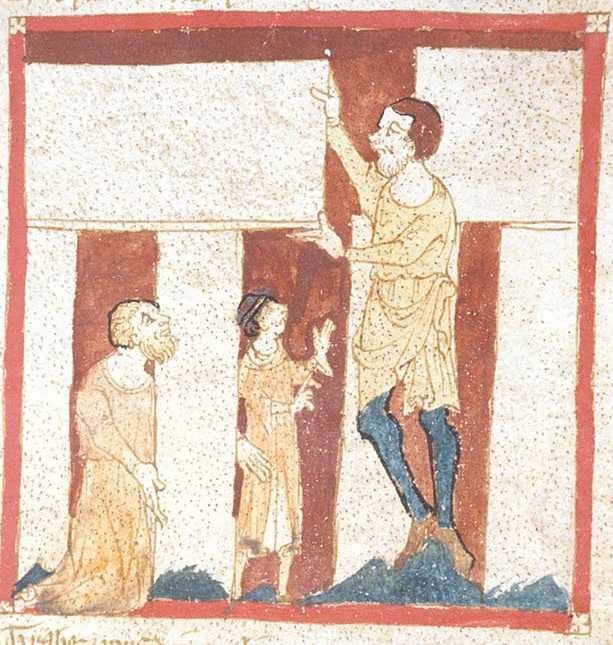
Another story states that the invading Saxon king Hengist. He was invited by British Celtic warriors to a feast with them, but he treacherously ordered his men to massacre the other guests - an unsettlingly precise 420 people. Hengist then erected Stonehenge on the site to show his remorse for the deed.
Neopaganism
In the 20th and 21st-Century, the monument has become a hot bed of spiritual activity for Neopaganism and New Age beliefs, which is predominately Druidism. In 2009 historian Ronald Hutton would later remark that “it was a great, and potentially uncomfortable, irony that modern Druids had arrived at Stonehenge just as archaeologists were evicting the ancient Druids from it.” The first group to utilise Stonehenge as a ritual site is the Ancient Order of Druids, which was founded in 1781. In August 1905 they performed a mass initiation ceremony at the site, in which they admitted 259 new members into their organisation.
These earlier rituals were complemented by the aforementioned Stonehenge Free Festival. The event was organised by the Polytantric Circle, held between 1972 and 1984. During this time the number of midsummer visitors had risen to around 30,000. Sadly, the site was closed to festival goers in 1985 after the Battle of the Beanfield, which took part between the Peace Convoy - on their way to the 1985 edition of the festival - and police, because the latter blockaded them from the monument.
Beginning in 1985, the year of the Battle, no access was allowed into the stones at Stonehenge for any religious reason. This "exclusion-zone" policy continued for almost fifteen years: until just before the arrival of the twenty-first century, visitors were not allowed to go into the stones at times of religious significance, the winter and summer solstices, and the vernal and autumnal equinoxes.” - Hallet, 2014
However, following a European Court of Human Rights ruling obtained by campaigners such as Arthur Uther Pendragon, the restrictions were lifted and people were allowed to worship between the stones once again.
A Special Place
Stonehenge had been on my list of places to visit for a long time - we drove past it enough times! - so to finally go there was wonderful. In truth, I thought it would be bigger than it was but that didn’t take away from it’s significance for me. I felt a connection with the past and immersed myself in the present. Sharing this visit with Da was pretty special too as he had visited as a child, so in a roundabout way I felt like I was connected with my late Grandfather as well. A special place indeed.

Avebury
Located about 6 and 7 miles (10 and 11 km) from the modern towns of Marlborough and Calne respectively in an area of chalkland in the Upper Kennet Valley, Avebury is a mystical place. An ancient henge with a modern village in the middle of it - its roots in the 6th-Century Saxon period - it is quite an anomaly. The chronology of Avebury's construction is unclear. As far as we are aware, it was not designed as a single monument, but the result of various projects that were undertaken at different times during late prehistory. British archaeologist Aubrey Burl suggested dates of 3000 BC for the central cove of the monument, 2900 BC for the inner stone circle, 2600 BC for the outer circle and henge, and around 2400 BC for the avenues. The purpose of the monument, much like Stonehenge, remains elusive to us. However, most are in agreement that the henge could have been a meeting place for the citizens of the area for seasonal fairs or festivals. With the West Kennet Long Barrow in the south and the avenues leading to the site, some have said that the sight is part of a Neolithic ritual complex. Again, this will need a post of its own, so I’ll be honing in on the themes of the day, medieval history and mysticism.
Early Medieval Period
When the Saxon, Jute, Angle and Frisian migrations began in the 5th-Century following the collapse of the Roman Empire, they may have come into contact and conflict with the local Celts. Aubrey Burl suggested;
The possibility that a small group of British warriors may have used Avebury as a fortified site to defend themselves from Anglo-Saxon attack.
He is theory comes the from etymological evidence, suggesting that the site may have been called weala-dic, meaning "moat of the Britons", in Old English. While name-place evidence can be helpful it often doesn’t paint the whole picture. There were signs of settlement at Avebury during this period, as grubenhaus - a type of timber hut with a sunken floor - were being constructed just outside the monument's west bank in the 6th-Century. Burl states;
“Only a few farmers appeared to have inhabited the area at the time, and they left the Avebury monument largely untouched. In the 7th and 8th centuries, the Anglo-Saxon peoples began gradually converting to Christianity, and during the 10th century a church was built just west of the monument.” - (Burl, 1979)
Yet, when they first come across Avebury, the Saxon settlers would have followed Germanic Paganism, which venerated a selection of deities, the most notable were Woden and Thunor. Within a ten-mile radius of Avebury there are four sites that were allegedly named after Woden: Wansdyke ("Wodin's ditch"), Wodin's Barrow, Waden Hill ("Wodin's Hill)" and perhaps Wanborough (also "Woden's Hill"). Despite this, there is no evidence that the early Saxons used the site for ay religious purpose. in 939, the earliest known written record of the monument was made. This came in the form of a charter of King Æthelstan which defined the boundaries of Overton, a parish adjacent to Avebury.

Late Medieval Period
With the full conversion of the country to Christianity, anything non-Christian gained an association with the Devil - Avebury was no different - this encouraged folk tales about God’s adversary in the imaginations of the locals. Burl states;
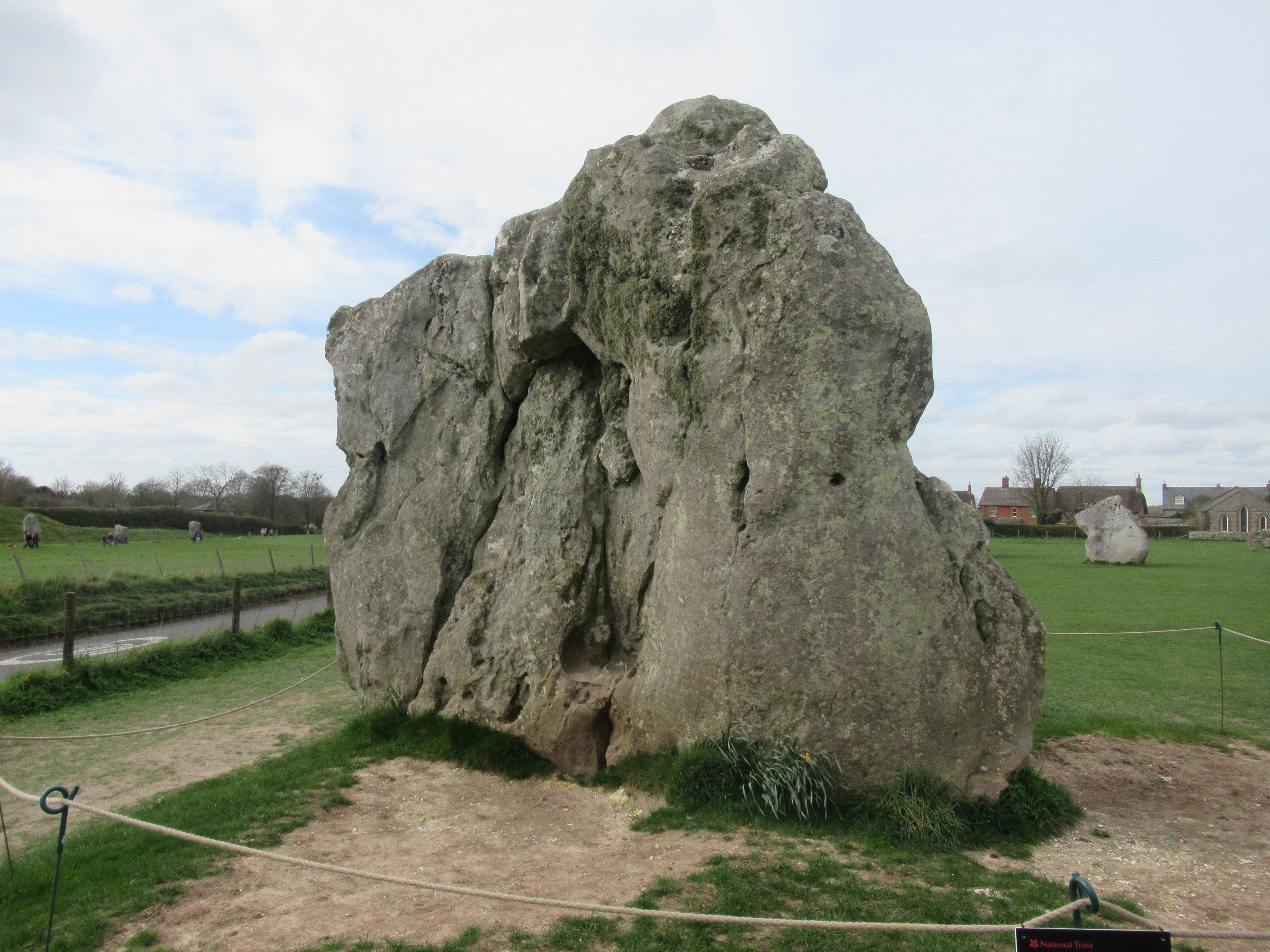
“The largest stone at the southern entrance became known as the Devil's Chair, the three stones that once formed the Beckhampton Cove became known as the Devil's Quoits and the stones inside the North Circle became known as the Devil's Brand-Irons.” - (Burl, 1979)
At some point during the 14th-Century, villagers began to dismantle the monument and filling in the pits. This is presumably because they were seen as having been erected by the Devil, which went against the village's Christian beliefs. It’s unknown how this came about but it is suggested by Burl that it could be one of two priests Thomas Mayn (who served in the village from 1298 to 1319), or John de Hoby (who served from 1319 to 1324) whipping up religious fervour.
In 1938, archaeologists found the body of a man carrying underneath one of the stones. He carries a leather pouch, in which were three silver coins dated to around 1320–25, as well as a pair of iron scissors and a lancet and was thought to be a travelling Barber-Surgeon. Burl states:
“It appears that the death of the barber-surgeon prevented the locals from pulling down further stones, perhaps fearing that it had in some way been retribution for toppling them in the first place, enacted by a vengeful spirit or even the Devil himself.” - (Burl, 1979)
Soon after the toppling some of the stones, the Black Death arrived in the village in 1349 almost halving the population. So it begs the question, had they actually unleashed the Devil? Who knows.
Neopaganism
Like Stonehenge, Avebury also has a passionate population of druids, Wiccans, pagans and heathens. They view Avebury’s stones as a "living temple" which they associate with the ancestors and spirits of place. The rites performed at Avebury traditionally adhere to and are known as gorseddau and involve participants invoking Awen (a Druidic concept meaning inspiration), with an eisteddfod section during which poems, songs and stories are performed to those attending the ritual. After this, The Druid Prayer composed by Iolo Morganwg in the 18th-Century and the later Druid Vow are usually recited.
However, the fact that amuses me about Avebury’s Neopagan usage is that so many pagan and druidic groups perform their ceremonies at the site, a rota has been established. As a result of this rota being implemented, the Loyal Arthurian Warband (LAW), the Secular Order of Druids (SOD) and the Glastonbury Order of Druids (GOD) use it on Saturdays, whilst the Druid Network and the British Druid Order (BDO) instead plan their events for Sundays.
A Living Temple
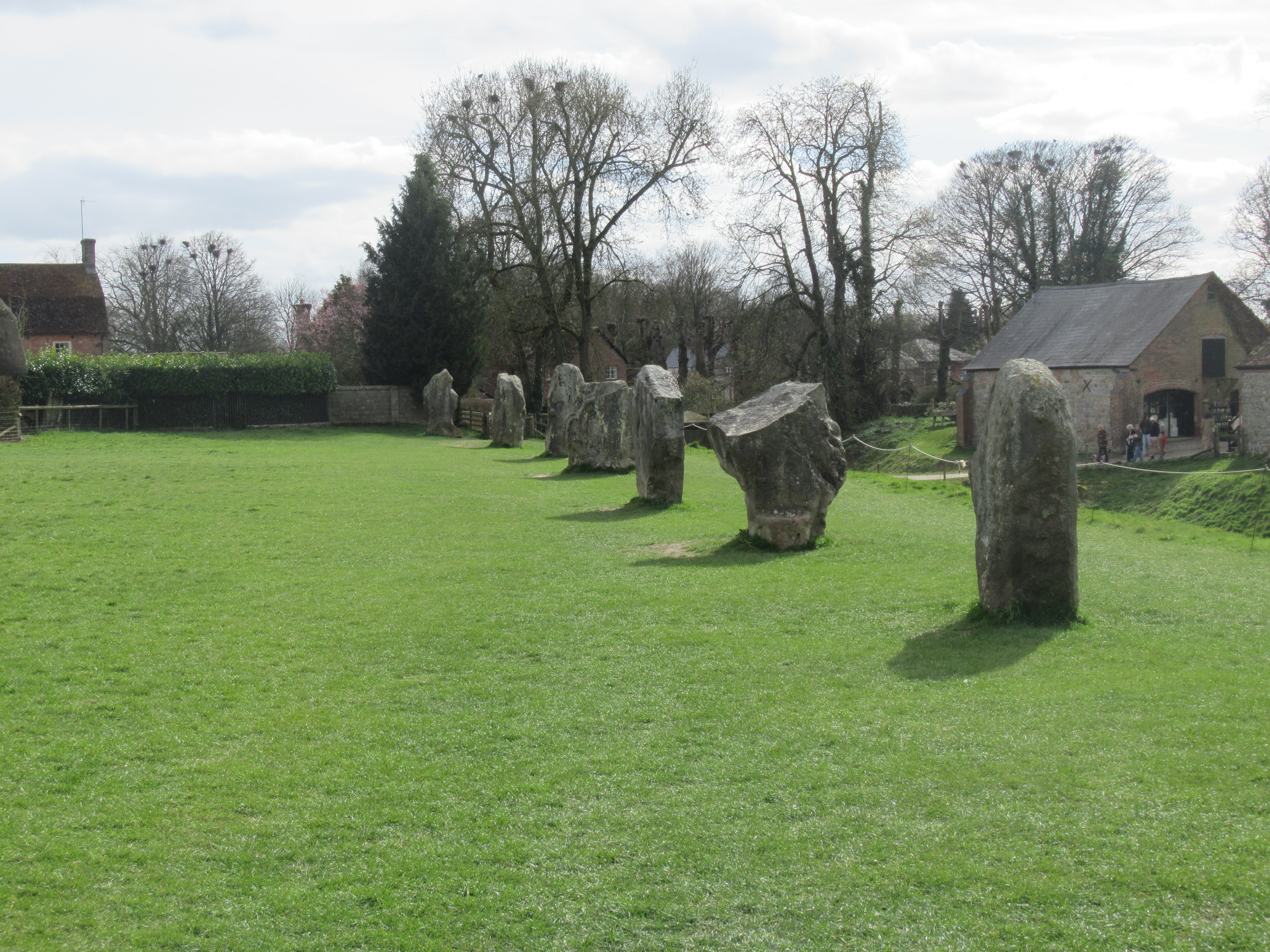
This was the first time Da had actually set foot inside the henge at Avebury. The last time he was there is was the finishing line of a marathon length charity walk he did with my Ma (mum) in aid of Alzheimer’s Society. He couldn’t believe the size of the henge around the stones and the fact that we could get so close to the stones unlike Stonehenge. For me, it was my second visit and I always find it an intensely magical place and to see it in the spring sunlight fed my soul. It was safe to say after all the sun, fresh air and history my energy for life was fully replenished in mind, body and soul.
A Grand Day Out
It was an amazing day to be out and about soaking in the ancient history of Wiltshire with my Da. We picked the perfect day for it and some of the wider views of Salisbury Plain were incredible as we drove to the sites. Wiltshire is a special county and one that I are up in and that I have called home for many years, yet now I live in Staffordshire I still feel its magical pull and the stones only strengthened that pull.

Bibliography
Young, C., Chadburn, A., Bedu, I., (January 2009), Stonehenge World Heritage Site Management Plan 2009, UNESCO: 20–22.
Schmid, R. E., (29 May 2008), Study: Stonehenge was a burial site for centuries, Associated Press
Easton, J., (1809), Jeffery of Monmouth's Account of Stonehenge, A Description of Stonehenge on Salisbury Plain
Brewer, E. C., (1870) Brewer's Dictionary of Phrase and Fable, HarperCollins
Geoffrey of Monmouth, (1137), Historia Regum Britanniae - The History of the Kings of Britain, Penguin Classics
Jeffs, A., (2021), Storyland: A New Mythology of Britain, Quercus Publishing
Hallet, E., (20th June 2014), Summer solstice: How the Stonehenge battles faded, BBC
Burl, A, (1979), Prehistoric Avebury, New Haven and London: Yale University Press
Greywolf, (2012), The Gorsedd of Bards of Caer Abiri, The British Druidic Order
Blain, J., Wallis, R., (2007), Sacred Sites Contested Rites/Rights: Pagan Engagements with Archaeological Monuments, Brighton and Portland: Sussex Academic Press