

Glastonbury Tor
The gateway to another world
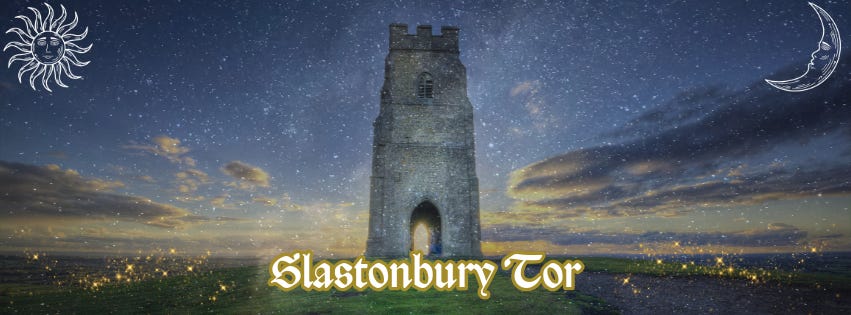
Everyone remembers the first time they saw the Tor rising in the distance on the way down to Glastonbury. With St. Michael’s Tower standing alone, a relic from a bygone age that casts an ethereal shadow over the town. The Tor has a long history, in the 20th-Century, archaeological excavations were undertaken to clarify the background of the monument and church, however some aspects of their history remain unexplained - which only adds to the magic and myth of the Tor. Artefacts of human visitation have been found dating from the Iron Age and Roman period, but the Tor as we know it began to take shape in the Early Medieval period. Evidence of several buildings has been found, they are believed to be the remains of an early church and monks' hermitage. Alongside this, the head of a wheel cross - dating from the 10th or 11th-Century - has been found. The original Saxon church was destroyed by an earthquake in 1275 - its epicentre though to be in Portsmouth or Chichester and was felt as far as Glamorgan - and the stone Church of St Michael was built on the site in the 14th-Century, of which only its tower remains.
The town of Glastonbury (Old English: “Glestingaburg”, Welsh “Ynys Wydryn” or “Ynys Gutrin” which translate as Isle of Avalon or Isle of Glass respectively) was first recorded in the late 7th-Century and early 8th-Century. The Old English name Glestinga is obscure and may derive from an Old English word or Celtic personal name or people group with the name Glast. Coupled with -burg - Anglo-Saxon in origin - which could refer to either a fortified place such as a burh or, more likely, a monastic enclosure.
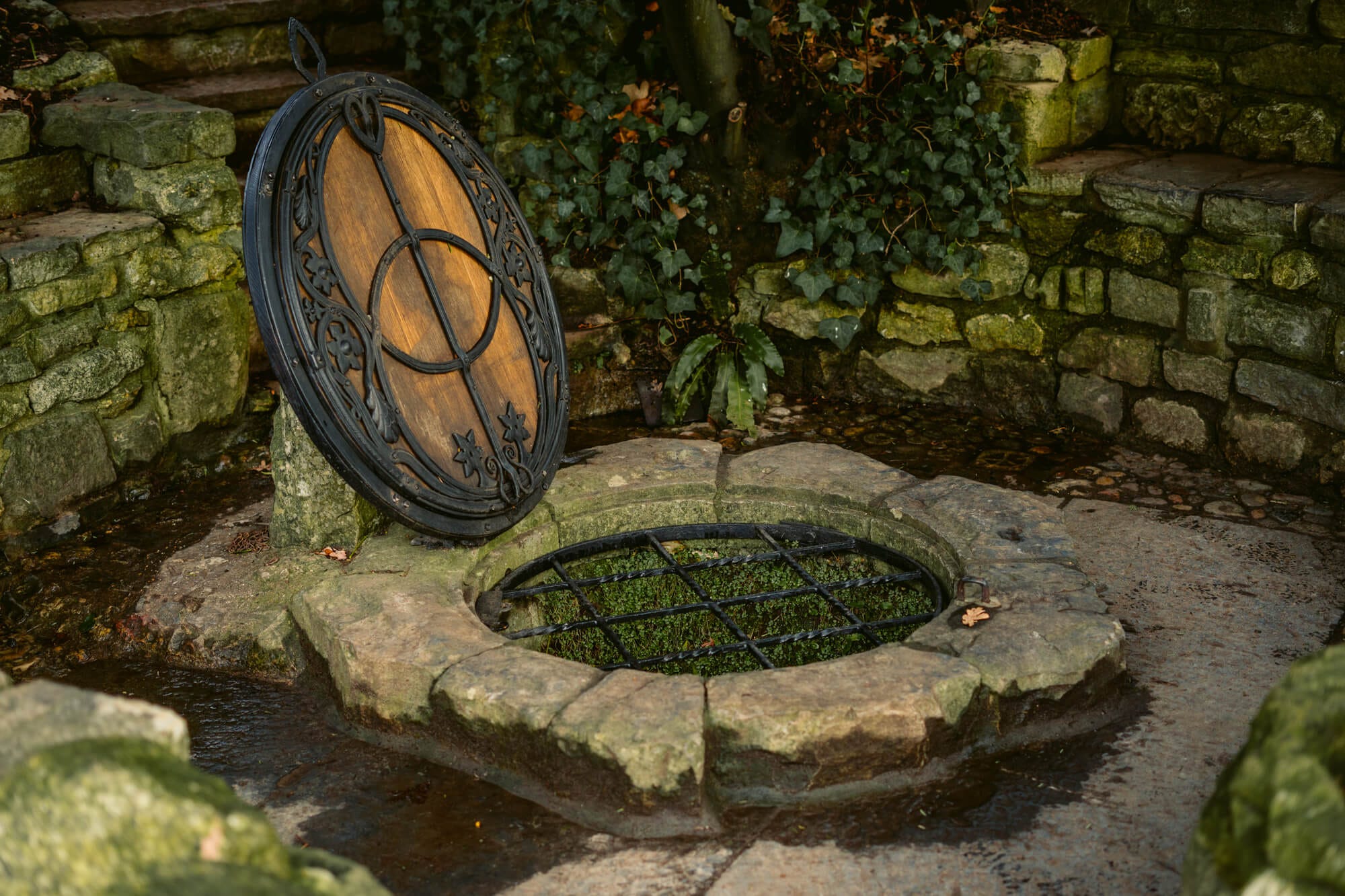
Surrounding the Tor are other holy sites such as the Chalice Well (also known as the Red Spring), which is an iron oxide rich spring that flows at the base of the Tor. Christian mythology suggests that Chalice Well marks the site where Joseph of Arimathea placed the chalice that had caught the drops of Christ's blood at the Crucifixion. The Well is then linked to the wealth of speculation surrounding the existence of the Holy Grail. The red of the water is also said by some Christians to represent the rusty iron nails used at the Crucifixion. Alongside this, the Holy Thorn Tree, also known as the Glastonbury Thorn (Crataegus Monogyna praecox) blooms in the Chalice Well garden every Christmas. Not far away but also running by the Tor is the White Spring, whose waters are rich in calcium. Water from both wells is drinkable and said to have healing properties and has a purpose built temple next to it.
The Tor has had visitations and settlement since prehistory. However, it is the 5th-Century to the 7th-Century that Glastonbury begins to take shape as the place we know it as today, and on the Tor evidence of occupation has been found around the later medieval church of St. Michael. Finds included postholes, two hearths including a metalworker's forge, two burials oriented north–south (which makes them unlikly to be Christian, as Christian burials are orientated east-west), fragments of 6th-century Mediterranean vases for wine or cooking oil (technical term is amphorae), and a worn hollow bronze head which may have topped a Saxon staff. During the late Saxon period there were at least four buildings on the summit of the Tor. The base of a stone cross demonstrates Christian use, and it may have been a hermitage due to its isolation as an “island” in what was once marshes and fens.
The earliest wooden church dedicated to St. Michael was built in around the 11th or 12th-Century and there is evidence for monk’s cells on the site. After the earthquake in 1275, a second church also dedicated to St Michael, was built of local sandstone in the 14th-Century by the Abbot Adam of Sodbury. It incorporated the original foundations of the previous building. It included stained glass and decorated floor tiles, there was also a portable altar of Purbeck Marble. There is a possibility that the Monastery of St Michael-on-the-Tor was a daughter house of the equally impressive Glastonbury Abbey.
The Church survived the Dissolution of the Monasteries, which ordered by King Henry VIII in 1539. However, the Tor was the place of execution where Richard Whiting, the last Abbot of Glastonbury Abbey, was hanged, drawn and quartered along with two of his monks, John Thorne and Roger James. Due to these violent executions the Tor became a pilgrimage site not only for its long-standing dedication to St. Michael the Archangel but also to these three martyrs.
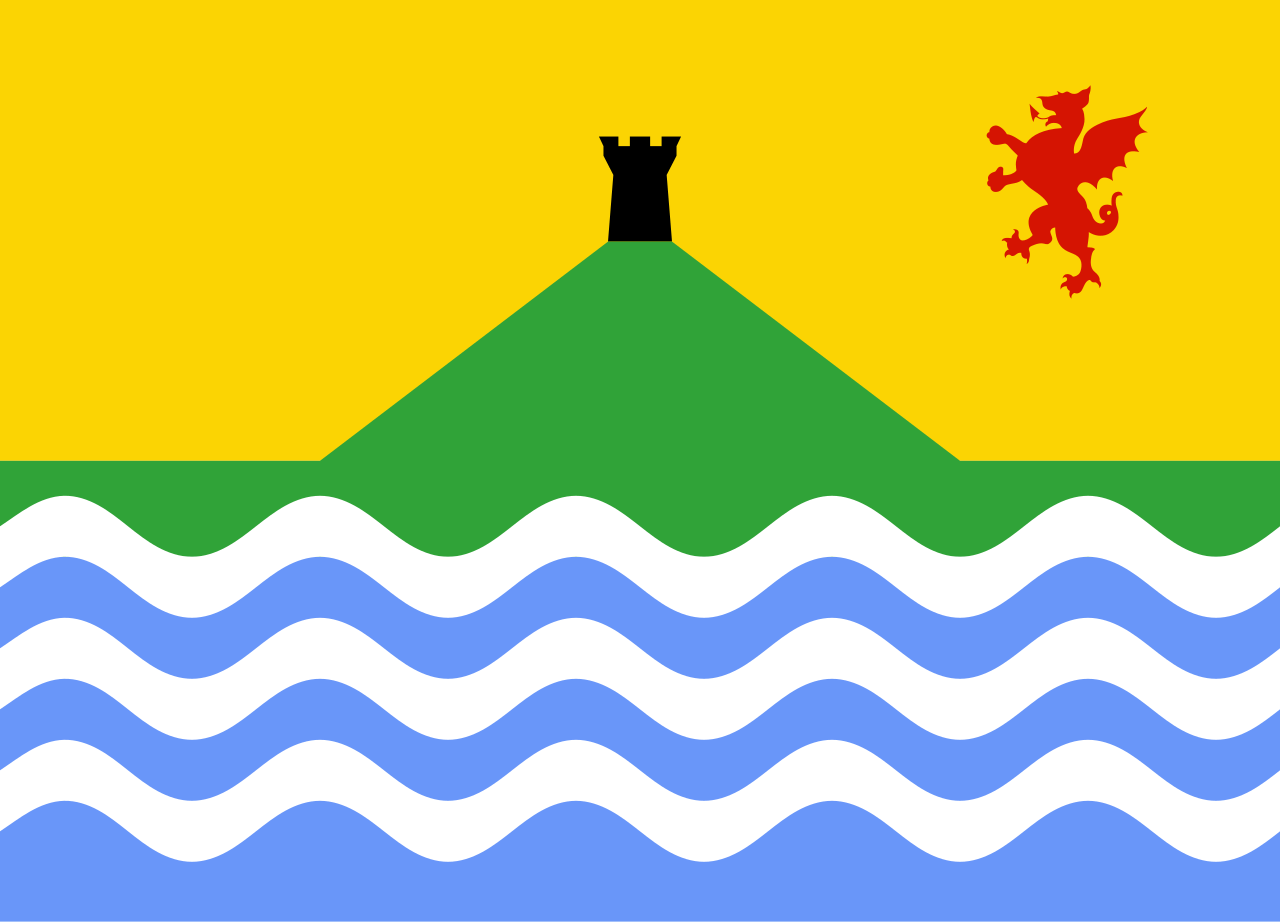
In modern times, the Tor is a place where spiritual ideas - such as paganism, Druidry and Christianity - mingle and live in a tranquil space. As well as being a place where myth and legend thrives. This is only aided by the natural phenomena known as the a Fata Morgana when the Tor appears to rise out of the mist. With the low lying damp ground being a key feature, this optical phenomenon occurs because rays of light are strongly bent when they pass through air layers of different temperatures. The Italian term Fata Morgana is derived from the name of Morgan le Fay, one of three powerful sorceress in Arthurian legend.
The Tor was called Ynys yr Afalon (meaning "The Isle of Avalon") by the local Britons. It is believed by some, including the 12th and 13th-Century writer Gerald of Wales, to be the Avalon where King Arthur was taken in hope that he could be saved and recover from his mortal wounds following the tragic Battle of Camlann - which Arthur fought his traitorous nephew Mordred. The Tor has been associated with Arthurian legend since 1191, when the alleged remains of King Arthur and his Queen Guinevere's neatly labelled coffins were found in the grounds of Glastonbury Abbey.
It was in the 19th-Century when the Tor gained its popular mythology as a gateway to the Otherworld. With the resurgence in Celtic mythology at the time, the Tor became associated with Gwyn ap Nudd, who is the first Lord of the Otherworld (Welsh: “Annwn”) and later King of the Fairies (Welsh: “Tylwyth Teg” which translates to “fair folk”). Gwyn plays a prominent role in the early Arthurian tale Culhwch and Olwen, which can be found in the Mabinogion - I recommend this version. Over time, Gwyn became associated with the Wild Hunt, in a role akin to Woden or Herne the Hunter. Some traditions name Gwyn's chief huntsman as Iolo ap Huw, who on every Halloween, "may be found cheering Cŵn Annwn [spectral hounds] over Cader Idris". In the Black Book of Carmarthen Gwyn states that his finest hound is one called Dormarch.
The Tor has also become a central place for the neo-pagan Goddess movement, with the flow from the Chalice Well being seen as representing menstrual flow and the Tor being seen as either a breast of the Goddess or her whole figure. This is celebrated with an effigy of the Goddess leading an annual procession up the Tor. The Goddess and her male counterpart the Horned God (in Wiccan practice) can be found throughout Glastonbury’s shops as altar pieces, artwork and other spiritual items for worship - with the wonderful smell of incense wafting all around you.
The Tor is a magical and intriguing place with a vibrant and storied history. For me it is always a place of spirituality and mythology. There is a tangible and healing energy, that makes the soul feel at ease, it is unlike any other place in the UK. Walking through the tower doorway you do feel this sense of transcending your consciousness into another realm, as if Merlin or Gwyn is giving you a glimpse of the unseen. Ultimately, I grew up with Arthurian legend and exploring it in my imagination, I’ll always have a part of me that believes that Artur will rise again from his slumber in Glastonbury to save Britain in its darkest hour. He is the once and future king after all!
Selected Bibliography
Glastonbury Information Centre (2024), The White Spring, https://glastonburyinformationcentre.co.uk/top-attractions/the-white-spring/
The White Spring (2024), The White Spring, https://www.whitespring.org.uk/